
Auto Body Shop vs. Collision Repair Center: Is There Actually a Difference?
A driver slides through an icy intersection on Broadway Avenue in Rochester and bumps another vehicle at low speed. The front bumper is cracked, one headlight is broken, and the hood no longer lines up correctly. The insurance company asks for a repair estimate, but the driver now has a different question.
Should the car go to an auto body shop or a collision repair center?
Many people assume those terms mean different types of businesses. In reality, the answer depends more on what the shop is equipped to repair than the name on the building.
The Names Sound Different. The Work Often Overlaps.
“Auto body shop” is the traditional term most drivers recognize. It generally refers to a business that repairs vehicle exteriors after accidents or damage.
“Collision repair center” became more common as vehicles grew more advanced. Modern collision repairs often involve structural measurements, advanced driver assistance systems, aluminum panels, radar sensors, and computerized diagnostics in addition to body and paint work.
Many shops use both terms because customers search for both.
The better question is not what the business calls itself. The better question is what repairs it performs under one roof.
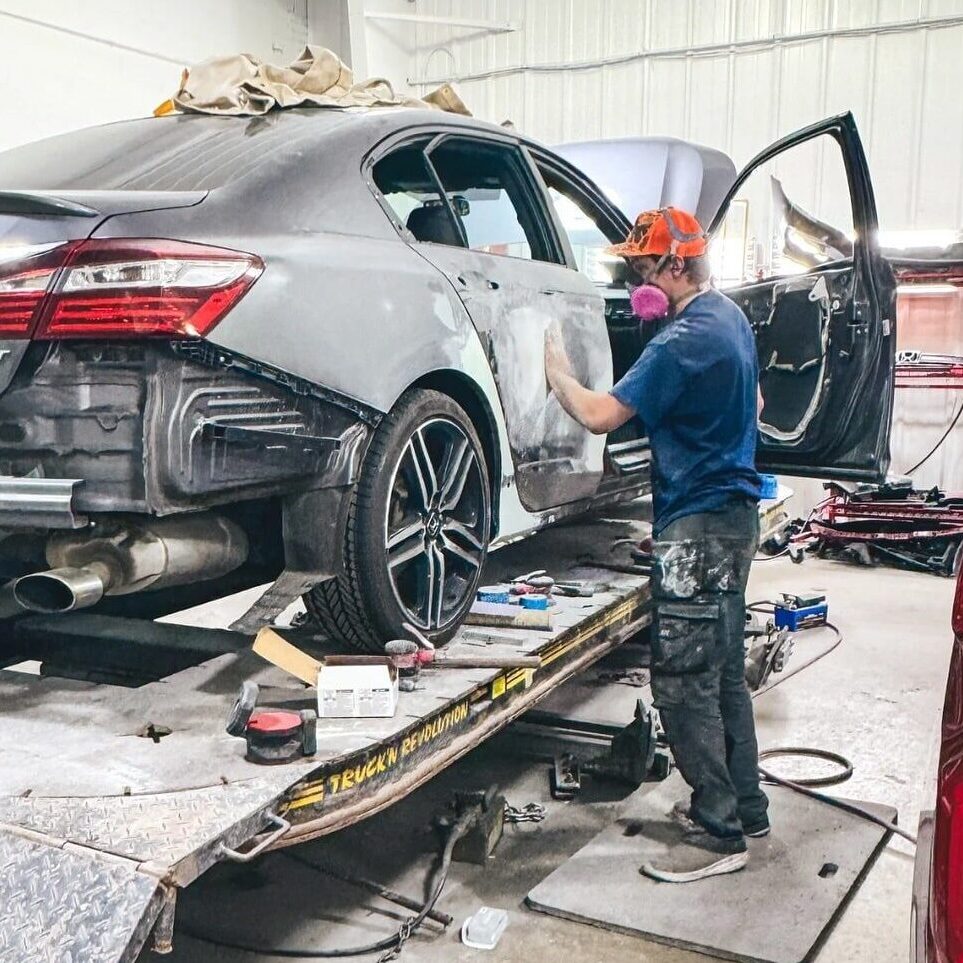
What A Full-Service Collision Repair Center Actually Does
A minor dent from a shopping cart and a front-end collision after hitting a deer on Highway 52 require very different repair processes. A complete collision repair facility typically handles the entire repair from estimate to final inspection.
That usually includes:
- Damage assessment and insurance estimates
- Complete teardown to uncover hidden damage
- Frame and unibody measuring and straightening
- Suspension inspections and wheel alignments
- Factory color matching and refinishing
- Paintless dent repair when appropriate
- Auto glass replacement
- Reassembly, calibration, and final quality checks
Some smaller body shops focus primarily on cosmetic damage such as dents, scratches, and panel replacement. Others offer the same comprehensive collision repair services as larger facilities. The name alone does not tell the whole story.
The Part Most Customers Never See
One of the biggest surprises during collision repair happens after the estimate.
The initial estimate is based on visible damage. Once technicians remove bumpers, fenders, trim, or interior panels, additional damage often appears underneath.
Bent brackets, damaged sensors, broken mounting points, or hidden structural issues are common after even moderate impacts.
This is why insurance supplements are normal. They are not signs that someone estimated incorrectly. They allow repairs to reflect the actual condition of the vehicle after teardown.
Knowing this ahead of time helps drivers understand why a repair timeline sometimes changes after work begins.
Repair Timelines Depend On More Than Labor
A common online search is, “how long does collision repair take in Rochester MN?”
The answer depends on several factors beyond the visible damage.
Parts availability has become one of the largest causes of delays. Some manufacturers ship replacement parts within days. Others may require several weeks, especially for newer models or specialty components.
Additional factors include:
- Insurance approval times
- Hidden damage discovered during teardown
- Calibration requirements for safety systems
- Paint curing and refinishing schedules
- Backordered OEM parts
A repair that appears simple from the outside can require several different departments before it is ready to return to the road.
Insurance Does Not Decide Where Your Vehicle Is Repaired
Many Minnesota drivers ask, “do I have to use the insurance company’s body shop?”
The answer is no.
Insurance companies often provide a preferred shop network because those businesses have established working relationships with the carrier. That recommendation does not remove your right to select the repair facility you prefer.
Choosing a shop that communicates directly with your insurance company can make the claims process smoother, but the final decision belongs to the vehicle owner.
At Rossi Collision Center, we work directly with American Family Insurance, State Farm, and Allstate to help simplify communication throughout the repair process. As of 2026, Rossi is also an Allstate Direct Repair Collision Center, allowing many Allstate customers to enjoy a more streamlined experience from estimate through final delivery.
Rossi is a Direct Repair Partner for State Farm and we also work extensively with Geico and Progressive.
For first-time accident claims, this often removes unnecessary stress because the repair facility can coordinate documentation, supplements, and approvals throughout the repair.
Certification And In-House Repairs Matter More Than The Name
Not every shop performs every service in-house.
Some facilities outsource frame repairs, wheel alignments, or paint work. Every transfer between businesses adds scheduling and transportation time.
Rossi Collision Center completes repairs in-house whenever possible, helping reduce unnecessary delays while maintaining better communication throughout the repair process.
Certification is another detail many drivers overlook. Rossi is also a Certified Subaru Collision Center, meaning Subaru repairs follow manufacturer repair procedures using the proper equipment, approved repair methods, and genuine Subaru parts when required. That helps restore the vehicle’s structural integrity and the performance of important safety systems after a collision.
Before approving repairs, ask one simple question:
“Which parts of my repair will be completed here, and which will be sent somewhere else?”
That conversation often provides a much clearer picture of the repair timeline than the original estimate alone.
Questions Drivers Commonly Ask
Is there really a difference between an auto body shop and a collision repair center?
Often, no. Many businesses use both terms interchangeably. The important difference is the range of services, equipment, and repair capabilities available, not simply the name.
What happens after a car accident repair estimate?
After the estimate, the vehicle is usually disassembled so technicians can inspect hidden damage. Parts are ordered, insurance supplements are submitted when needed, repairs begin, and the vehicle moves through paint, reassembly, and final inspections.
How long does collision repair take in Rochester MN?
Minor cosmetic repairs may take only a few days. Moderate collision repairs often require one to three weeks depending on parts availability, insurance approvals, and the complexity of the damage.
Do I have to use the insurance company’s body shop?
No. Minnesota drivers have the right to choose the collision repair shop they want. Many drivers choose a shop that already works directly with their insurance company because it can simplify estimates, supplements, approvals, and communication throughout the claim. Rossi Collision Center works directly with American Family Insurance, State Farm, and Allstate, and is an Allstate Direct Repair Collision Center.
How can I tell if a shop can handle serious collision damage?
Ask if the shop performs structural repairs, frame measuring, suspension work, paint refinishing, and repairs in-house. Manufacturer certifications, such as Subaru certification, also demonstrate that a shop follows approved repair procedures for those vehicles.
Ask About The Repair Process, Not Just The Name
Drivers preparing for an insurance claim, returning a leased vehicle, repairing a Subaru after an accident, or getting a vehicle ready for resale all benefit from asking about repair capabilities instead of focusing on the words “auto body shop” or “collision repair center.”
A repair facility that works directly with major insurance companies, performs repairs in-house, and holds manufacturer certifications can often provide a smoother experience from estimate through delivery. Before scheduling your repair, ask how the shop handles insurance communication, where the work is performed, and what certifications its technicians and facility maintain. Those answers tell you far more than the sign on the building.